
Garage Door Service in Orinda
Garage Door Repair for Orinda's 1961-Era Homes
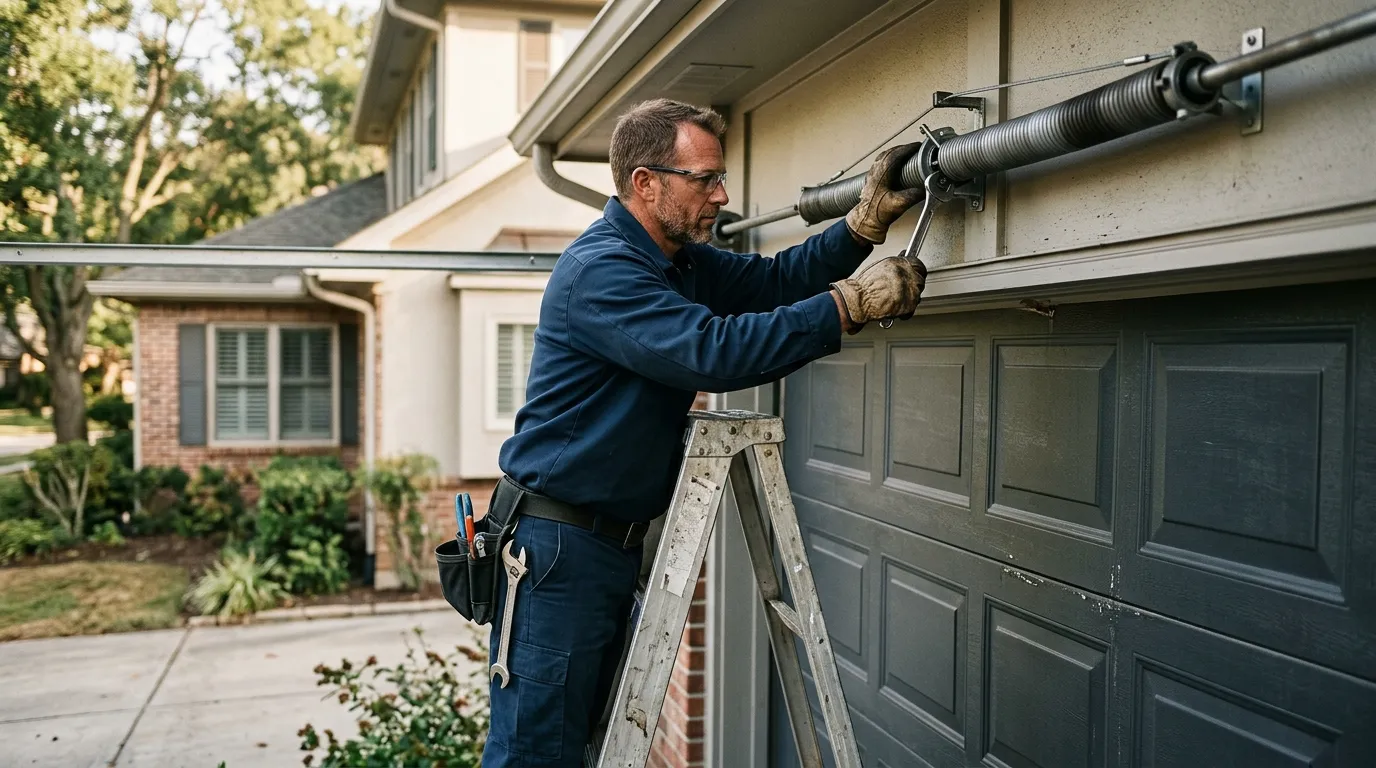
Orinda homes built around 1961 still run original torsion hardware. Danville Garage Door Pros drives the 12 miles to fix springs, cables, and openers built into that era's tract doors.
- Licensed & Insured
- Same-Area Service Calls
- Upfront Pricing
What Happens When You Call
-
1
Call or Request a Quote
Tell us what the door is doing and roughly how old the house is - that alone points us toward the likely part before a truck leaves.
-
2
On-Site Diagnosis
A tech checks the spring, cables, tracks, and opener in person and tells you plainly what is actually wrong.
-
3
Straight Price, No Surprises
You get a number before any work starts. It covers parts and labor, nothing added after the fact.
-
4
Fixed the Same Visit
Most repairs are done in one trip. If a part needs sourcing, we tell you that upfront instead of guessing.
The Cost of This Job
Most of the garage doors we open in Orinda have never had their spring, cable, or drum swapped out. The median home here was built around 1961, and a torsion spring rated for 10,000 cycles doesn't last sixty years of daily use - it just hasn't failed yet, which is different from being fine. When we quote a job in Orinda, the first question is whether the opener bracket and the track are original too, because on a house this age they usually are, and that changes what the repair actually involves versus a newer install.
We can't give you a number here without seeing the door - spring size, track length, and whether the header needs reinforcing all move the price. What we can tell you is that a straight spring swap on original hardware almost never stays a straight spring swap once we're up on the ladder.
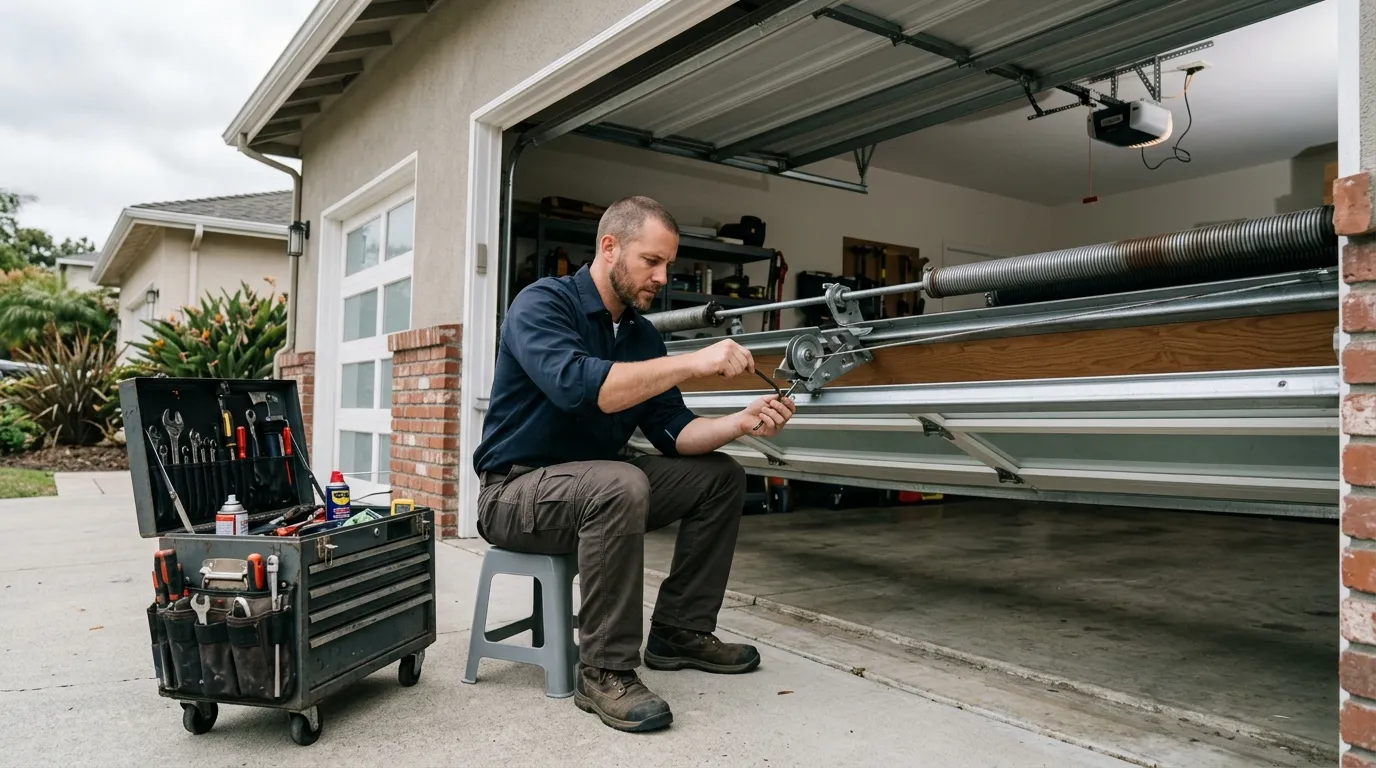
The pulley, the end bearing plate, and the cable drum tend to be the same age as the spring, and if one's worn the others usually are too. That's not upselling, it's just what sixty-year-old steel looks like.
Where This Job Goes Sideways
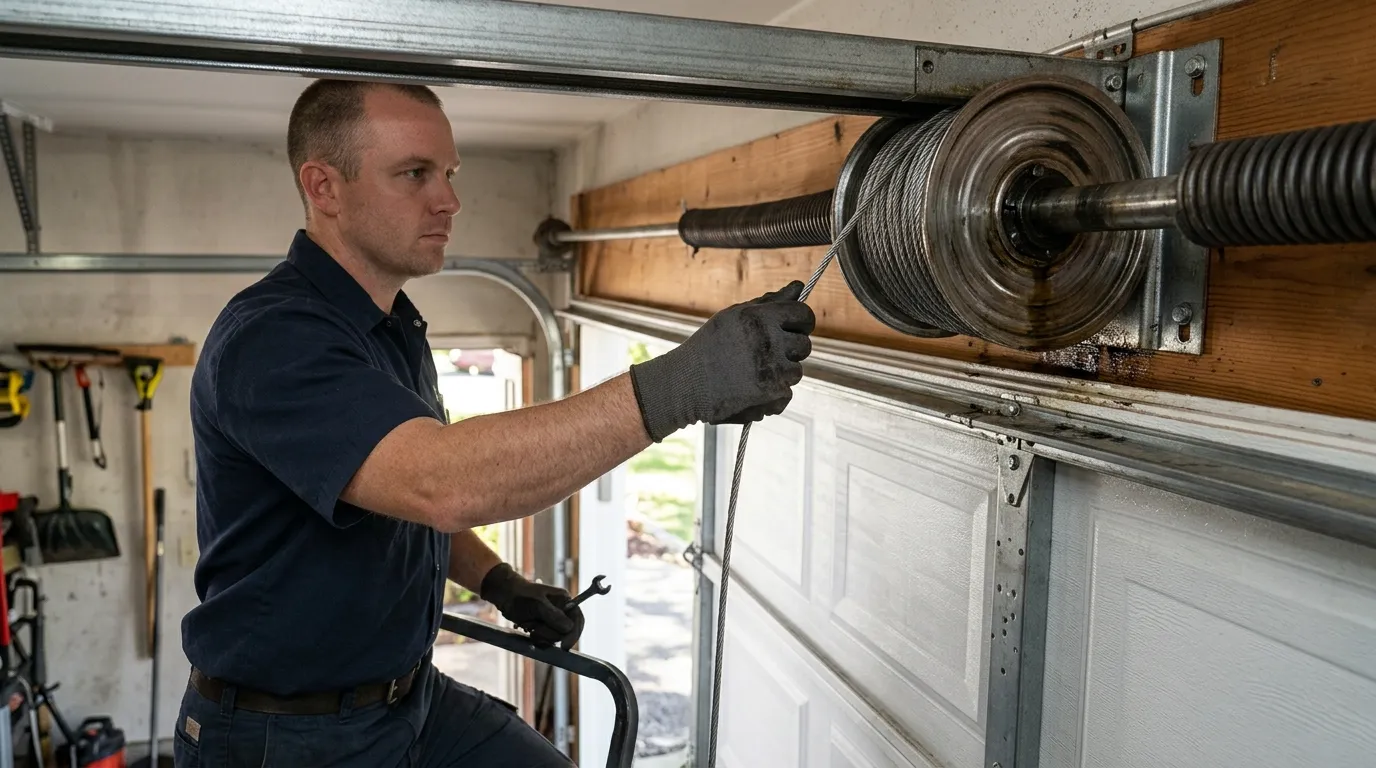
The failure we see most in Orinda is a homeowner replacing just the spring and leaving the original cable drums in place. Drums from the early 1960s were often sized for door weights and track geometry that don't match today's replacement springs exactly, so the door goes back up unbalanced - it looks fine for a few weeks, then the opener starts straining, and six months later a cable snaps under load. On a house with this median build year, we treat the drum and the spring as one decision, not two separate line items.
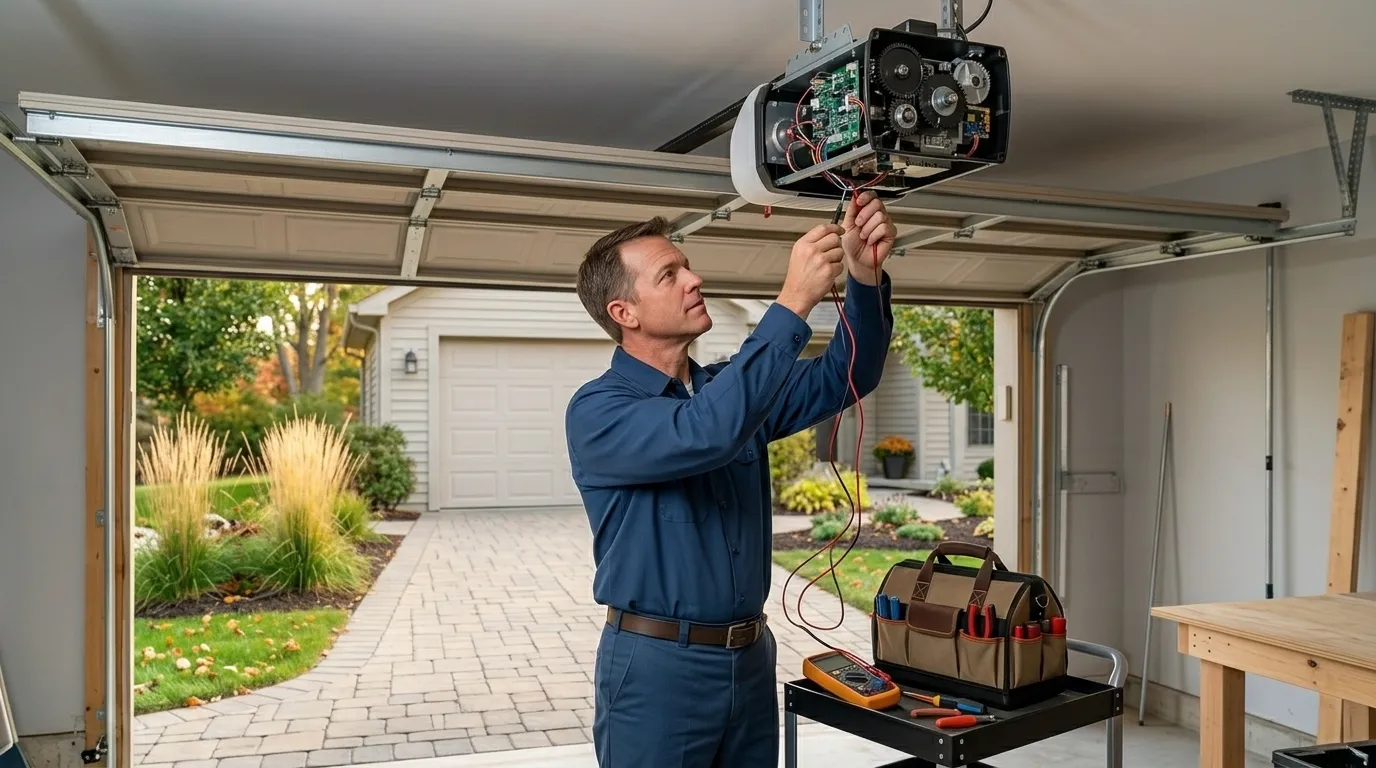
The other place it goes sideways is the opener. A lot of Orinda garages still run the opener that came with a mid-2000s retrofit, bolted to bracket hardware that's original to 1961. When that bracket finally lets go, it's usually not the opener's fault - it's fifty-plus-year-old lumber and a bracket never rated for the belt-drive units sold today.
Why It Happens Here
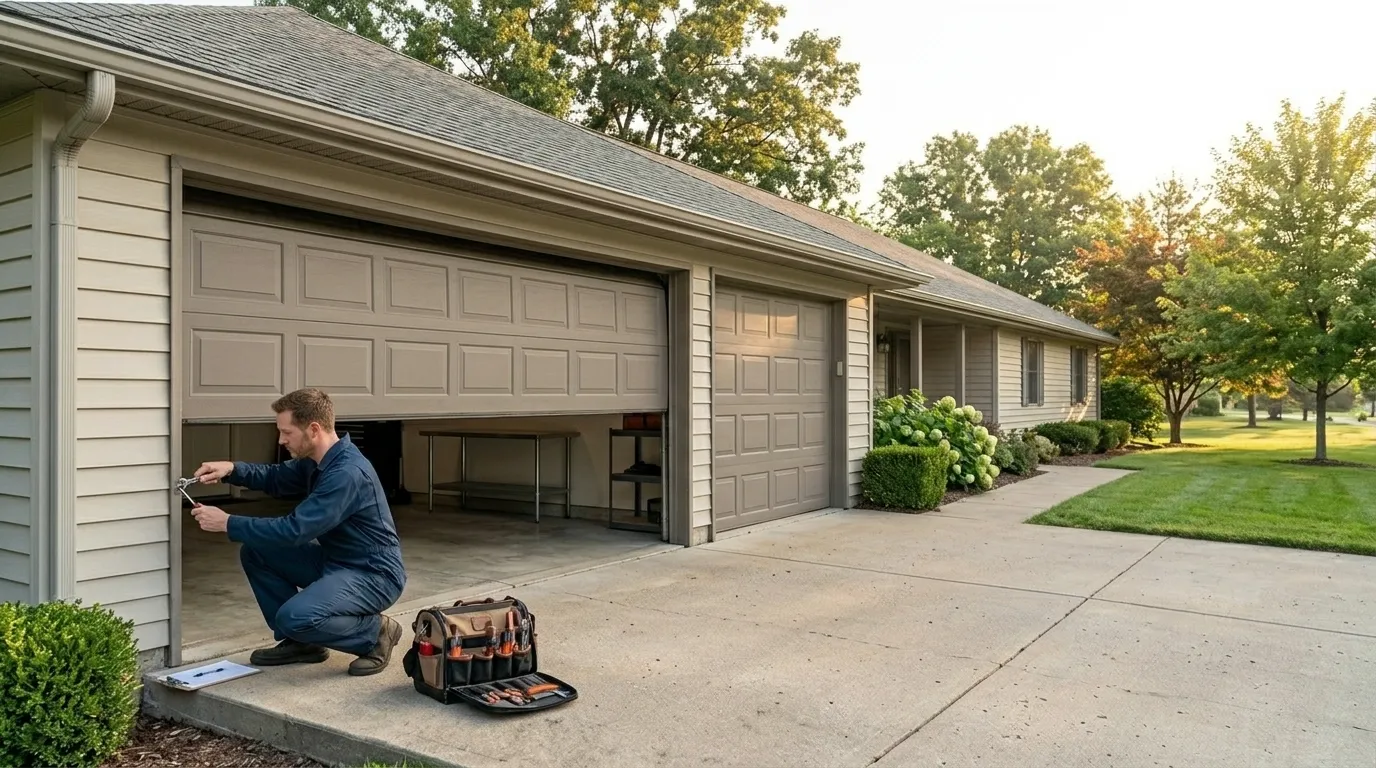
Orinda sits about 12 miles from our shop in Danville, and it's one of thirty communities across the wider service area we cover, where the housing stock runs from 1938 up through 2008 with a median build year of 1972. Orinda's own median - 1961 - puts it noticeably earlier than that area-wide average, which is the whole reason the hardware conversation is different here than it is on the newer end of our coverage. Older median year, more original steel still in the ceiling.
The mild temperate climate around here doesn't stress-crack springs the way a freeze-thaw cycle would elsewhere, so failures tend to be slow fatigue rather than sudden weather damage - which is partly why original hardware has survived this long without anyone noticing it's overdue. It's not that Orinda doors fail more often; it's that when the original spring finally does go, there's a lot more original hardware sitting right behind it waiting to go next.
How We Fix It
When we're called into one of Orinda's roughly 7,386 households for a door built to 1961-era specs, we start by checking the drum and spring sizing against the door's actual weight rather than assuming the old numbers still apply, then move to the bracket and track before touching the opener. If the header's original wood is sound, we reinforce it rather than replace it - no reason to open up framing that's doing its job.
We do bring newer torsion springs and drums that match current door weights, since exact 1961-spec parts aren't something anyone stocks. That's a limitation worth saying out loud: we're not restoring the door to factory-original, we're matching it to hardware that's actually available today and rated for the load it's carrying now. On a door this old, that's usually the safer call than chasing an exact original match anyway.
Talk to a Orinda Technician First
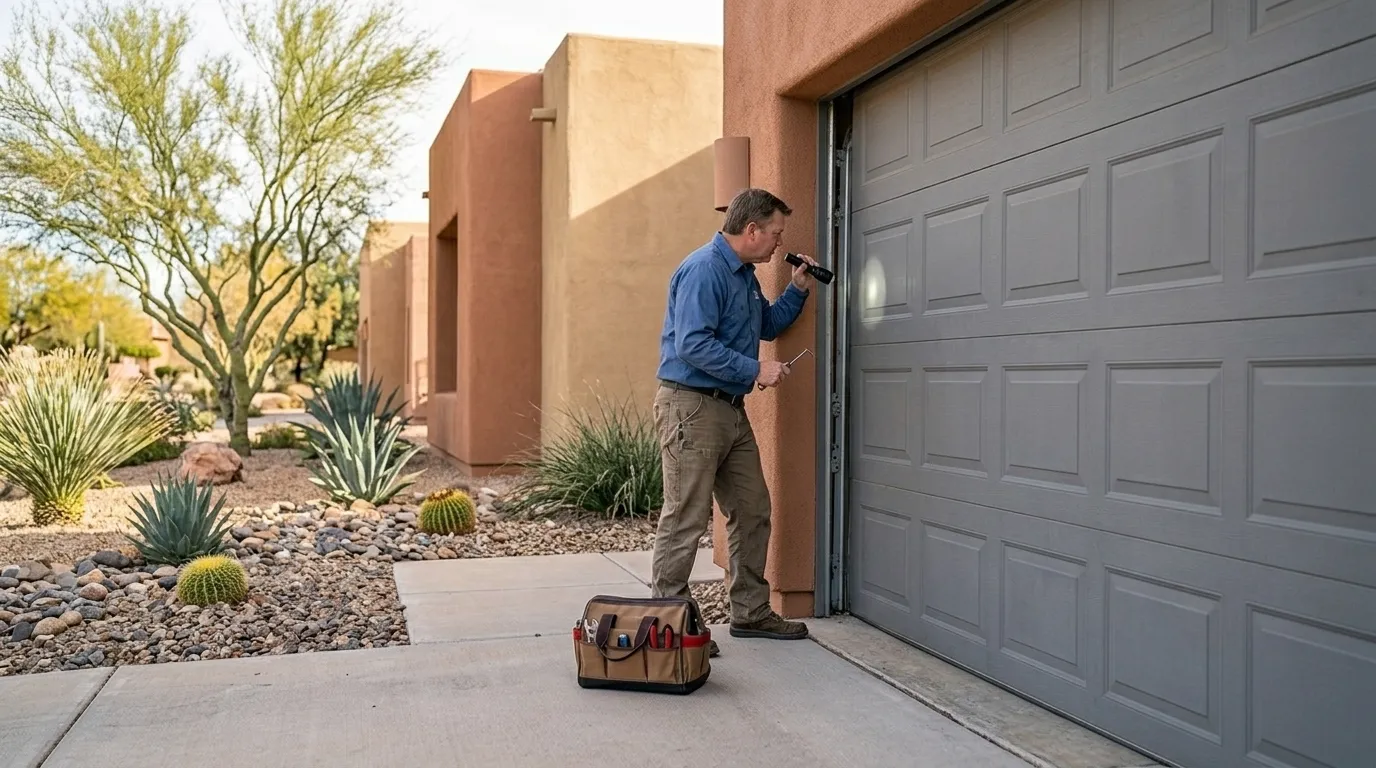
Describe what the door is doing and get a straight answer on what it likely needs.
Other Garage Door Services in Orinda
Recent Work in Orinda
A look at jobs our crew has been on nearby.
Why Orinda Calls Us
Frequently Asked Questions
Is my garage door spring original if my Orinda house was built around 1961?
Very possibly, especially if no one's mentioned replacing it. A torsion spring can run for decades before it visibly fails, so a house built around the median year here can easily still have its factory spring under real strain. We check cycle wear on the spring, the cable drums, and the end bearing plate together rather than assuming any one part is newer than the house.
Do you have a branch or truck stationed in Orinda?
No. We run out of Danville, about 12 miles away, and drive out for scheduled jobs. We don't claim a local depot or a guaranteed response window in Orinda - we're straightforward about that so you know what you're booking.
Why does my opener strain even though it's newer than the door?
A newer opener bolted to an original 1961-era bracket and track is only as strong as that old hardware. If the drum or spring is undersized for the door's real weight, the opener compensates by working harder every cycle, which is often what wears it out early - the opener usually isn't the actual problem.
Need Garage Door Service in Orinda?
Call now for straight answers on cost and timing.