
Service
Garage Door Roller Replacement in Danville
Rollers wearing out on your Danville garage door? See why 1960s-70s tract housing here leads to roller failure, how we replace them, and what it costs.
- Licensed & Insured
- Same-Area Service Calls
- Upfront Pricing
What Happens When You Call
-
1
Call or Request a Quote
Tell us what the door is doing and roughly how old the house is - that alone points us toward the likely part before a truck leaves.
-
2
On-Site Diagnosis
A tech checks the spring, cables, tracks, and opener in person and tells you plainly what is actually wrong.
-
3
Straight Price, No Surprises
You get a number before any work starts. It covers parts and labor, nothing added after the fact.
-
4
Fixed the Same Visit
Most repairs are done in one trip. If a part needs sourcing, we tell you that upfront instead of guessing.
Why It Happens Here
Housing across this service area was mostly built between 1938 and 2008, with the median year sitting at 1972, and the bulk of it went up during the 1960s and 70s boom. That matters for rollers because that generation of doors almost always shipped with steel rollers on plain, unsealed bearings - cheap to make, loud from day one, and good for maybe 10,000 open-close cycles before the bearing surface wears oval and the roller starts binding in the track.
Our climate here is mild temperate, so we don't get the freeze-thaw cracking or ice-jammed track problems that wreck rollers in colder regions. That's the good news.
The trade-off is that failure here is almost always slow wear, not sudden weather damage - grease dries out, steel wears against steel, and nobody notices until the door is grinding on every cycle. In a house built in the 1960s or 70s that's never had the rollers touched, that wear has usually been running for decades.
Across the 30 named communities we cover, from Diablo two miles out to Port Costa twenty miles away, we see the same pattern house after house: original steel rollers, original stems, and a track that's worn a groove to match them.
How We Fix It
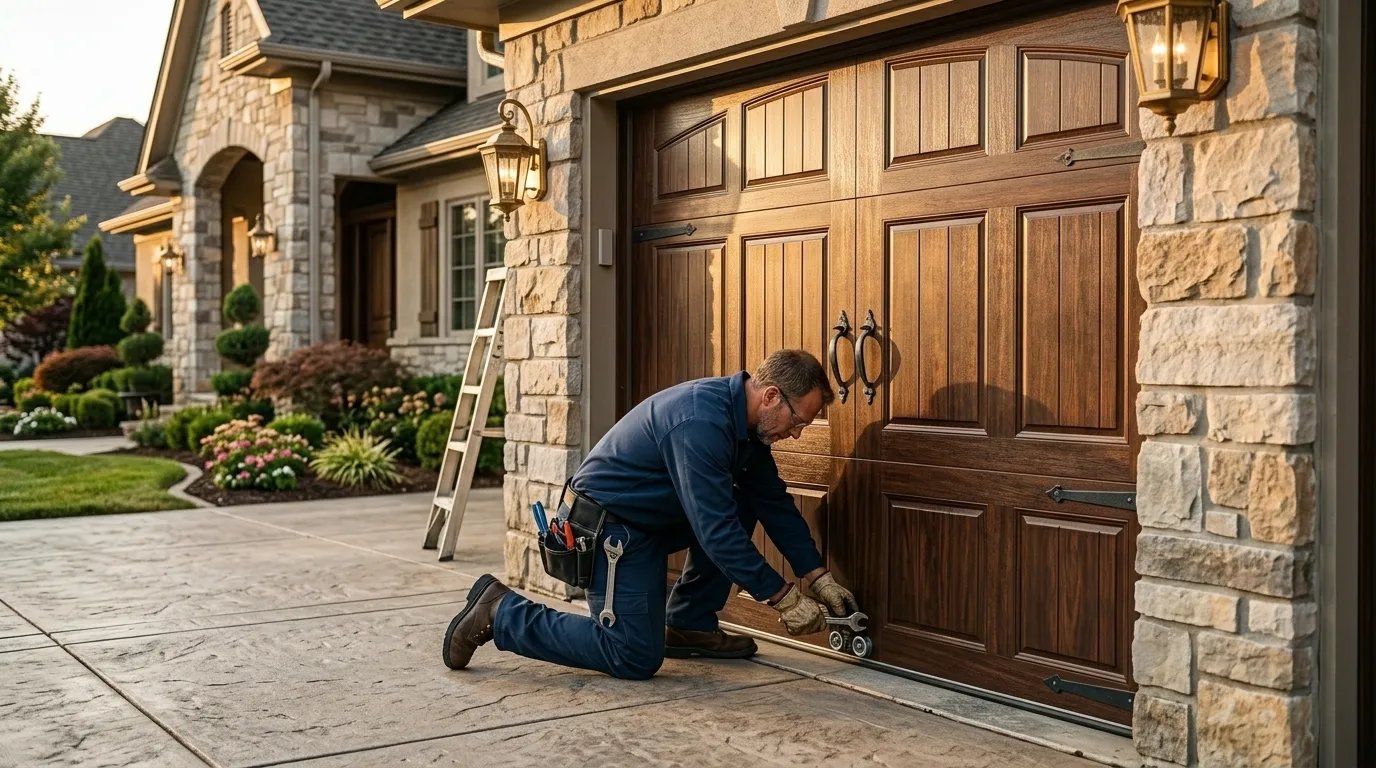
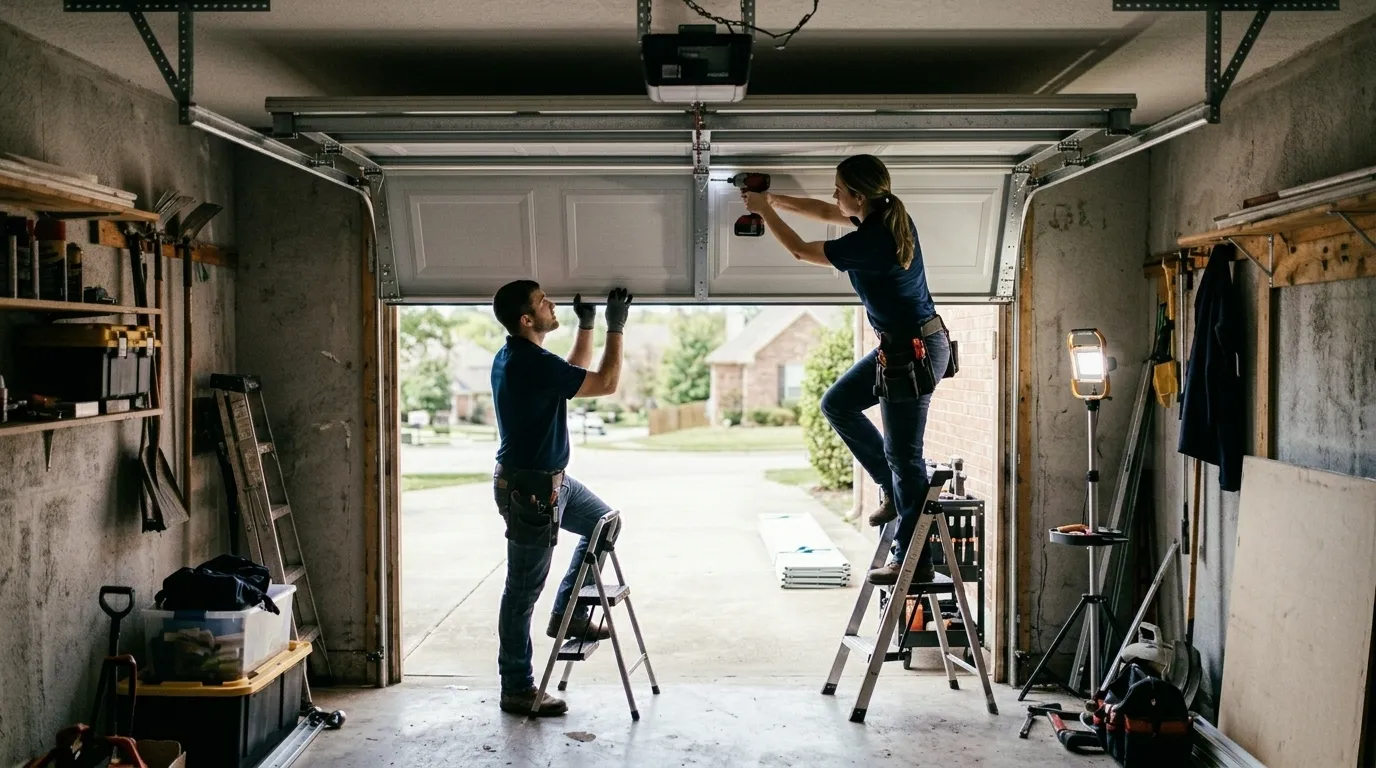
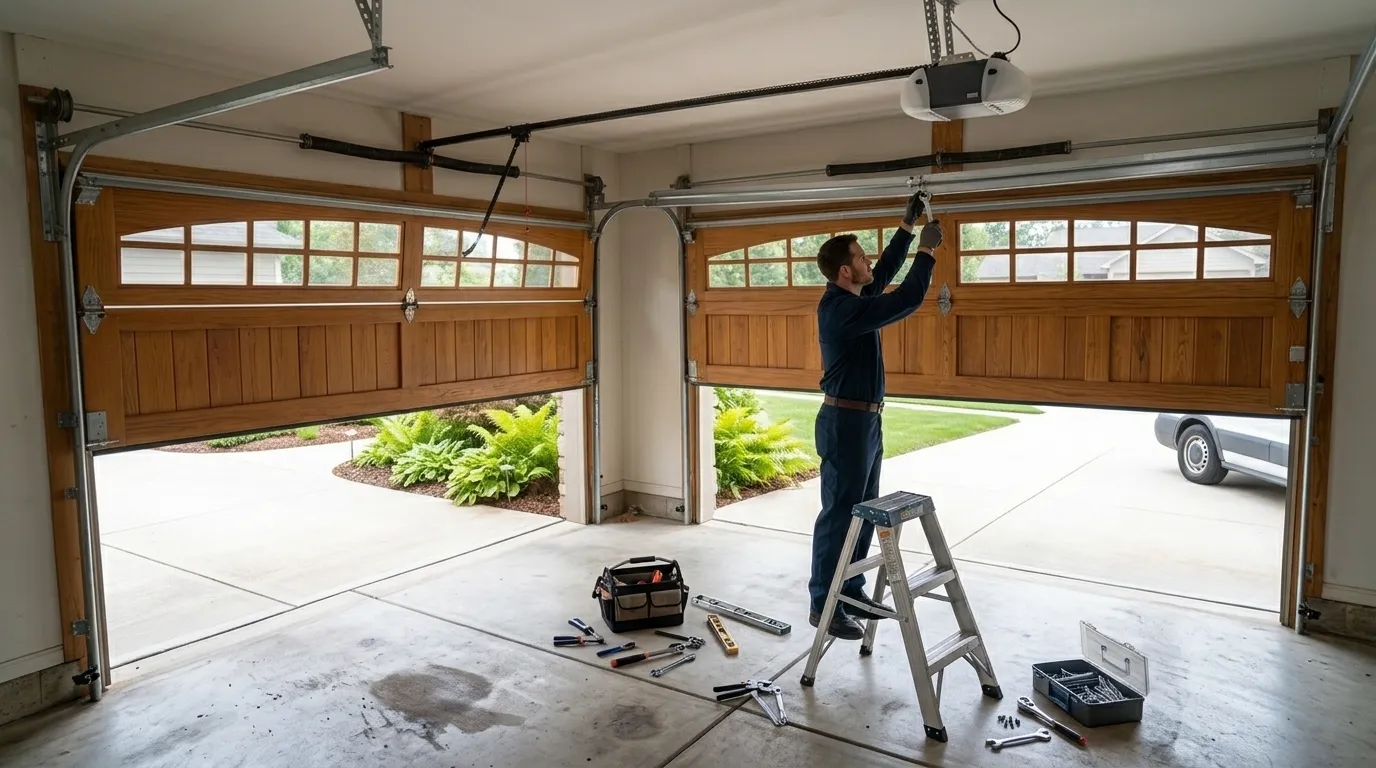
We pull the door down, disconnect the opener, and check the track alignment before we touch a roller - a bent track will chew through new rollers just as fast as old ones, so fixing that first matters. Then we replace the rollers one at a time, starting at the bottom section and working up, so the door stays supported and square in the track the whole time.
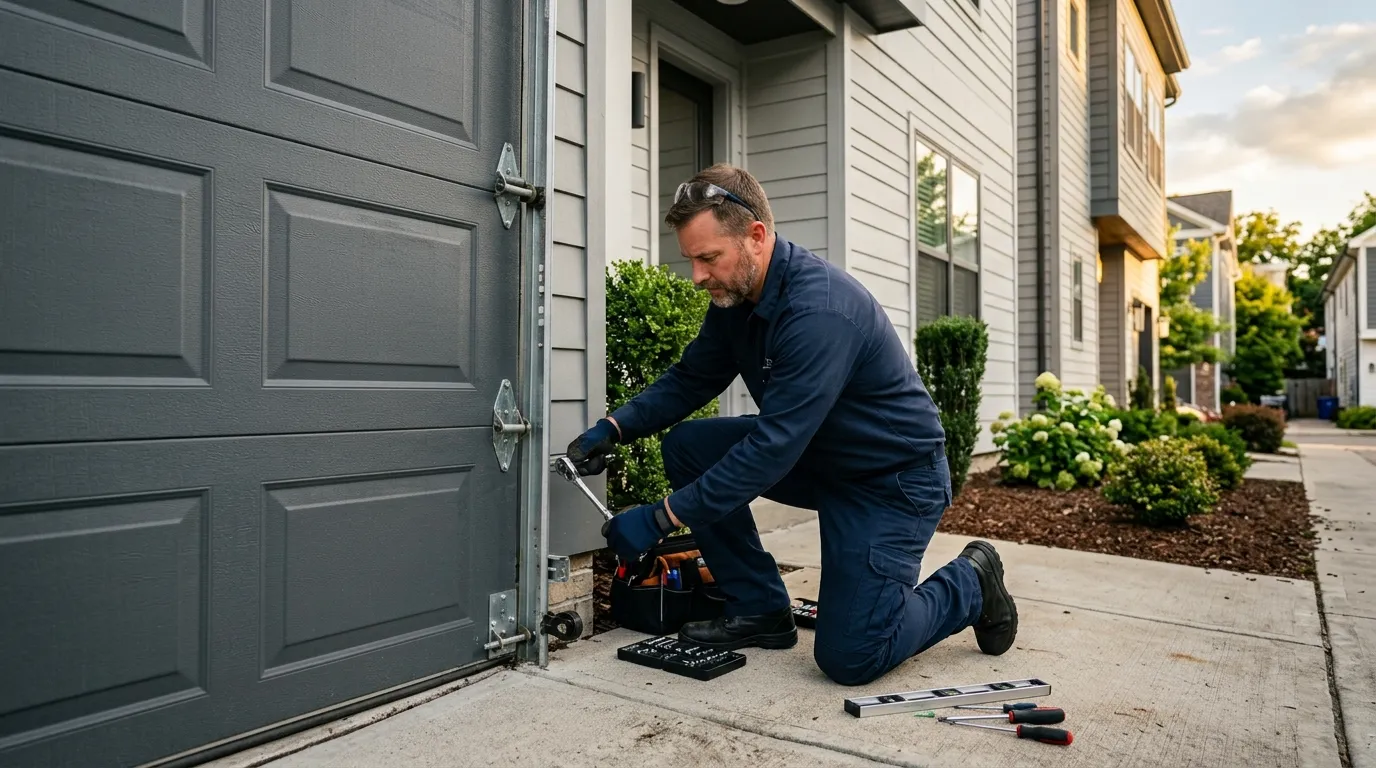
For most houses with the original 1960s-70s steel rollers, we swap to nylon rollers with sealed ball bearings. They run quieter, they don't need the periodic oiling steel rollers do, and they don't wear the track the way steel-on-steel does over time. If the stems are bent or the roller brackets are rusted through - which we do see on original hardware this old - we replace those too rather than force a new roller onto a bad stem.
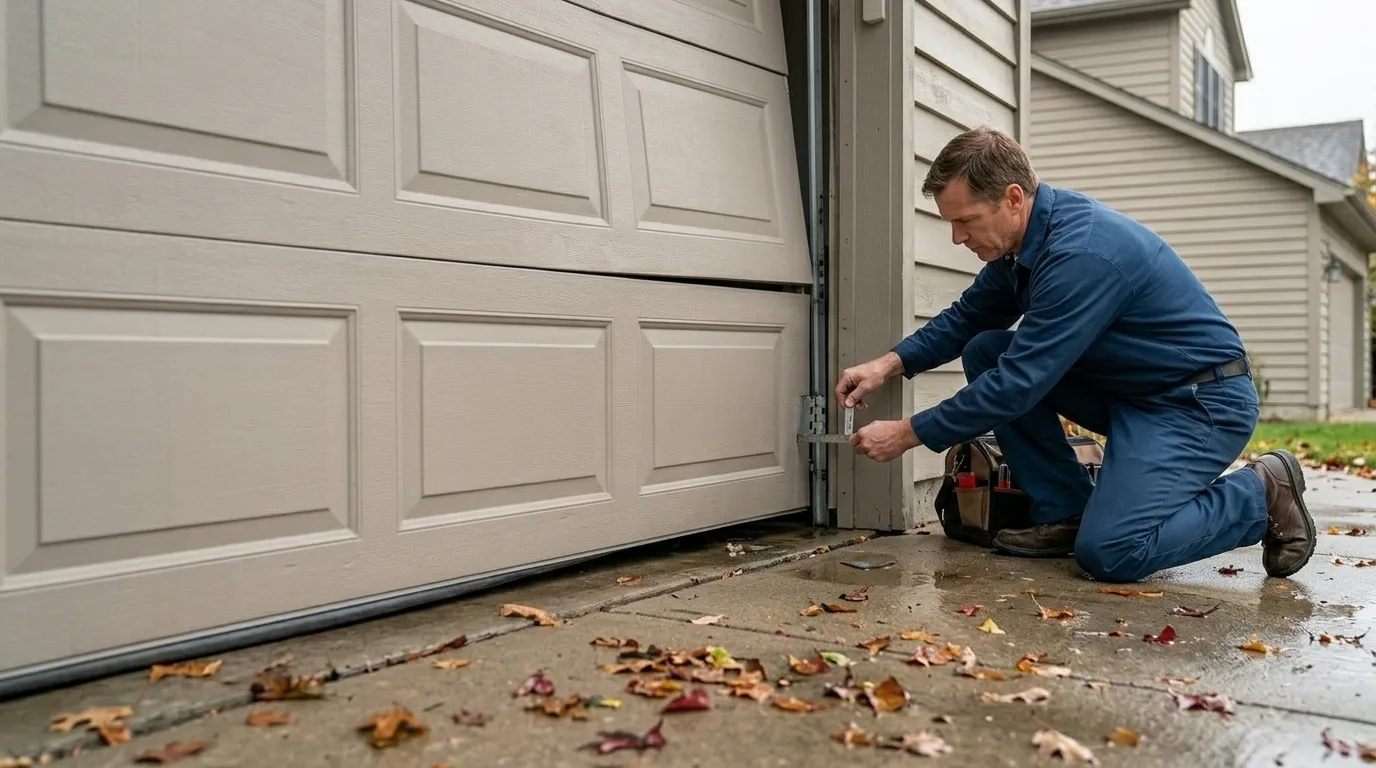
One limitation worth saying plainly: if the track itself is badly bent or the door is out of square from years of rollers grinding in a worn groove, roller replacement alone won't fix the noise or the sticking. That's a track repair or, past a certain point, a track replacement job, and we'll tell you which one you're looking at before we start.
The Symptom
The tell is a grinding or rattling noise that gets louder as the door moves, especially near the top of the run where the door curves into the horizontal track. Owners usually describe it as a shopping-cart-wheel sound, and it's almost always the rollers, not the opener or the springs.
You'll also see the door hesitate or jerk at certain points in the track rather than moving smoothly the whole way. That's a roller that's worn flat on one side, so it's not rolling anymore - it's dragging and catching with every rotation. On the original steel rollers common to 1960s and 70s construction here, this shows up gradually over months, not overnight.
A second sign is visible wear at the roller stem - a groove or a shiny worn patch where the roller has been rubbing against the track edge instead of rolling cleanly inside it. If you can see daylight through a gap where the roller sits crooked in the track, that roller's bearing is gone. None of this is an emergency the way a broken spring is - a worn roller won't drop a door on anyone - but left alone it accelerates wear on the track and the opener motor that's fighting extra friction on every cycle.
The Cost of This Job
We don't have a set price to quote here without seeing the door, so we're not going to make one up. What we can say is that roller replacement is one of the more affordable garage door repairs, because it doesn't touch the spring system or the opener - it's hardware and labor, not a full teardown.
Cost on a given job depends mostly on how many rollers need replacing (some doors only need the bottom two or three, others need the full set of ten), whether the stems or brackets are also shot, and whether steel or nylon rollers make sense for that door. Nylon costs a bit more upfront but runs quieter and lasts longer, which is usually the better call on a door that's already original 1960s-70s stock and due for other maintenance soon anyway.
If you're getting a quote, ask whether it includes track inspection - a shop that only prices the rollers and skips checking the track can end up costing you a second visit when the new rollers wear fast in an already-damaged groove.
Talk to a Technician Before You Book
Describe what the door is doing and get a straight answer on what it likely needs.
Jobs Like Yours
Recent work from this service line.
Why Danville Calls Us
Frequently Asked Questions
How do I know if it's the rollers and not the springs?
A broken spring shows up as a door that's suddenly heavy or won't stay open, often with a loud bang when it lets go. Worn rollers show up as noise and jerky movement while the door still opens and closes fine under power. If the door moves but sounds rough, it's almost always the rollers.
Can I replace just a few rollers instead of the whole set?
Yes, and on a lot of jobs that's exactly what we do. If only the bottom rollers are worn - which is common since they carry the most weight and see the most cycles - we'll replace those and leave healthy rollers alone rather than charge you for a full set you don't need.
Will new rollers fix a noisy door completely?
Usually, but not always. If the track is bent or badly worn from years of grinding, new rollers will still catch and rattle in that damaged section. We check the track before quoting the job so you know if roller replacement alone will solve it or if track work is part of the fix.
How long does roller replacement take?
For a straightforward job replacing rollers on a door with a sound track, it's typically done in one visit. Jobs where we also find bent stems, rusted brackets, or a track that needs adjusting take longer, since we're addressing more than the rollers themselves.
Need Garage Door Roller Replacement in Danville?
Call now for straight answers on cost and timing.