
Service
Garage Door Repair for Danville's Aging Door Hardware
Danville homes built between 1938 and 2008 are hitting the age where torsion springs and openers wear out. We fix the failure, not just the symptom.
- Licensed & Insured
- Same-Area Service Calls
- Upfront Pricing
What Happens When You Call
-
1
Call or Request a Quote
Tell us what the door is doing and roughly how old the house is - that alone points us toward the likely part before a truck leaves.
-
2
On-Site Diagnosis
A tech checks the spring, cables, tracks, and opener in person and tells you plainly what is actually wrong.
-
3
Straight Price, No Surprises
You get a number before any work starts. It covers parts and labor, nothing added after the fact.
-
4
Fixed the Same Visit
Most repairs are done in one trip. If a part needs sourcing, we tell you that upfront instead of guessing.
Why It Happens Here
Danville's housing stock runs from 1938 to 2008, with the median build year sitting around 1972. That means a huge share of the doors we get called out on are original or close to it - installed when the house went up and never touched since. Torsion springs are rated by cycle count, not years, but a door on a house built in the early 1970s has had five decades to rack up openings, and most homeowners don't count them until the spring lets go with a bang in the driveway.
Our mild temperate climate actually works against you here in a quiet way. There's no hard freeze to force an inspection, no big swing in humidity that makes a bent track obvious.
Doors here don't get replaced because of storm damage - they get replaced or repaired because the hardware simply ran out of cycles. Across the 30-plus neighborhoods we cover, from the older sections near Diablo and Blackhawk to newer construction further out toward Alamo and Norris Canyon, the pattern holds: age of the door, not weather, is what brings us out.
We also see a lot of galvanized springs that were sized for a lighter door decades ago, before insulated panels became standard upgrades. When a homeowner swaps in a heavier insulated door but keeps the original spring, the mismatch shortens the spring's working life fast.
How We Fix It
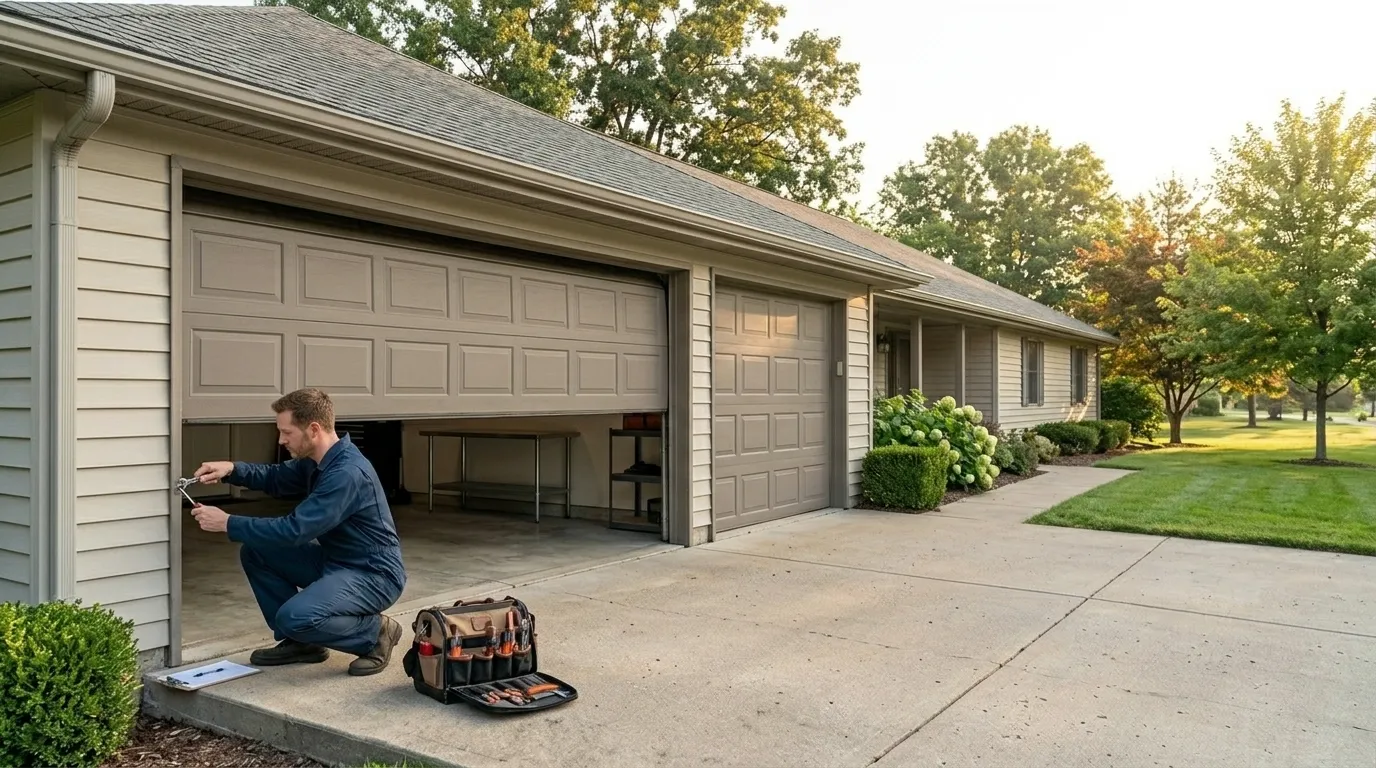
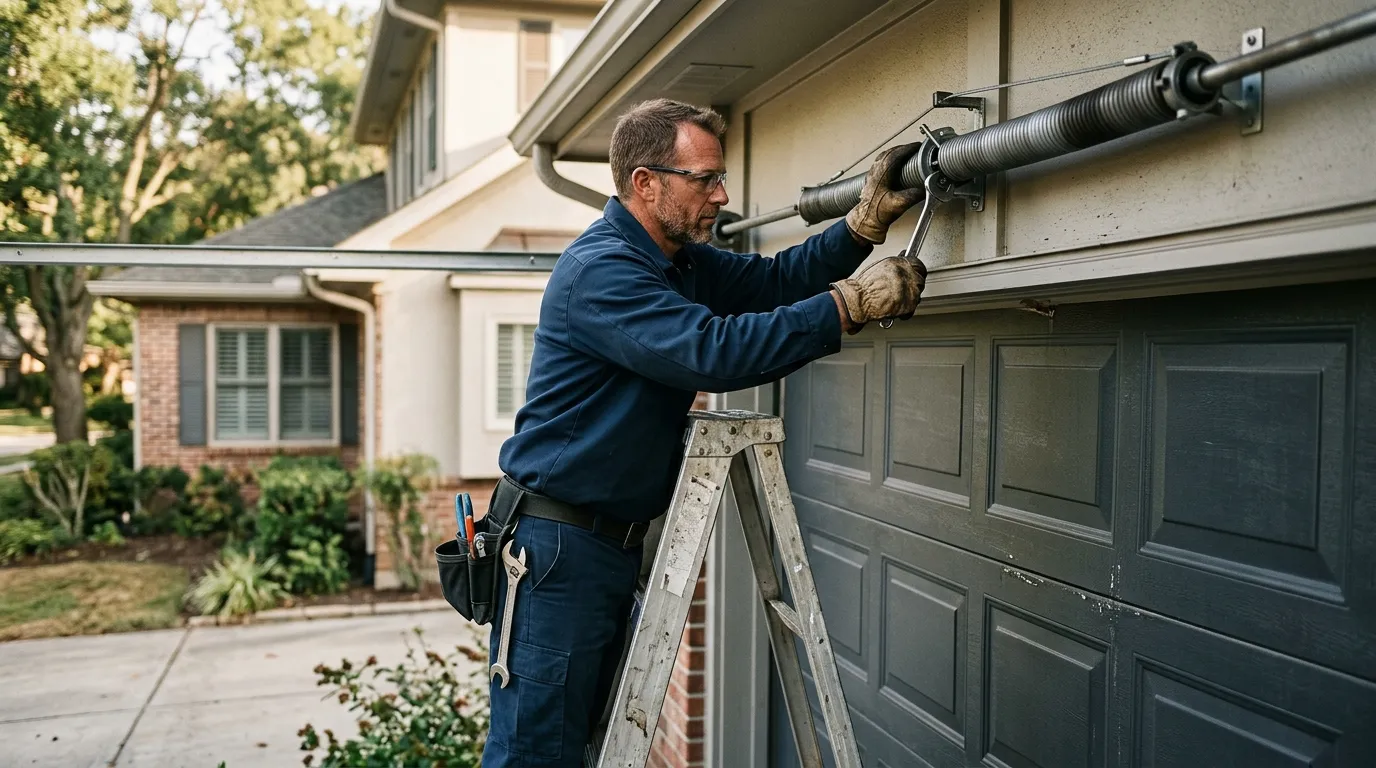
For a broken torsion spring, we don't patch it - we replace the pair, even if only one side failed, because the second spring on a door from the same era is usually close behind on cycle count. We size the new springs to the actual door weight, which matters if the door's been upgraded since the house was built in the 1960s or 70s.
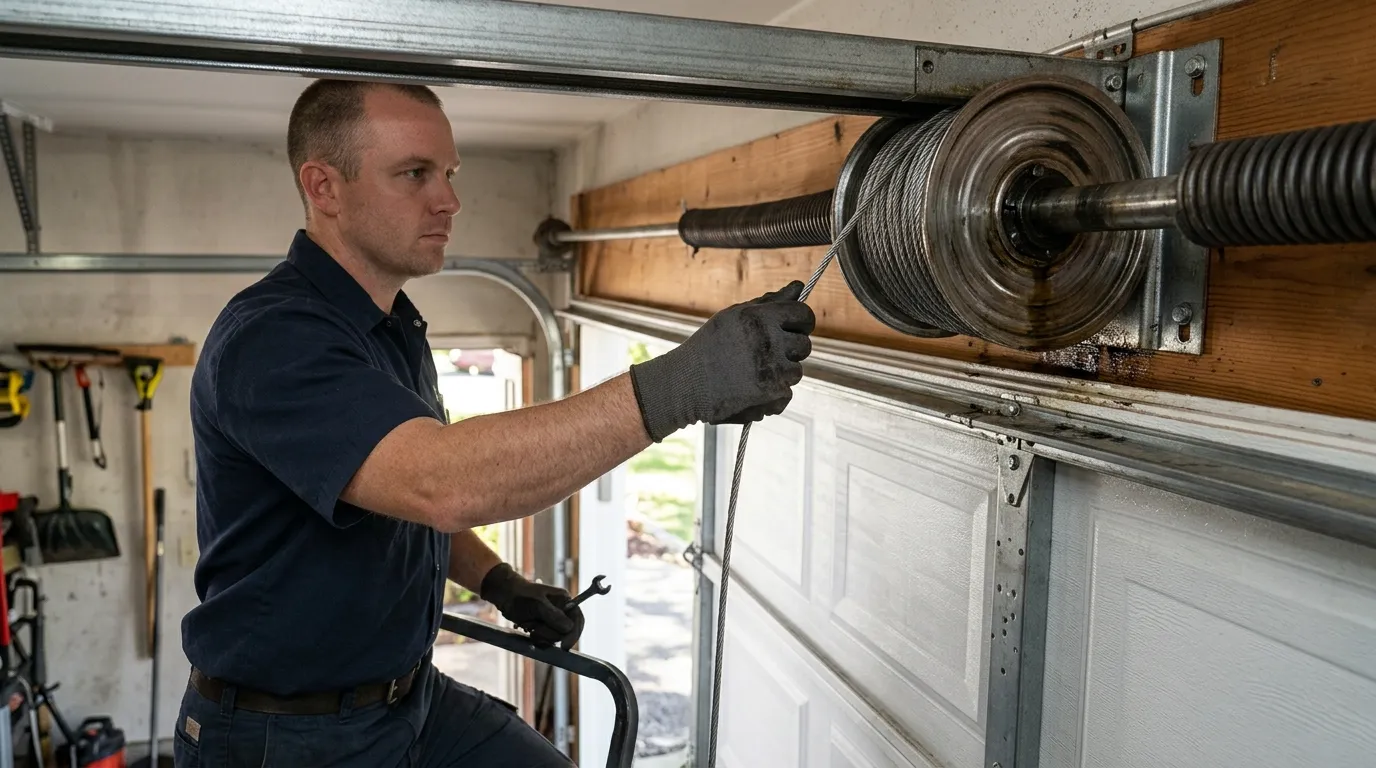
We also check the drums, cables, and center bearing plate while the door is unloaded, since on a door this old it's common for one of those to be worn past spec even if it wasn't the part that failed today. Replacing a spring without checking the rest of the system just moves the next breakdown a few months down the road.
If the opener is original to the house, we'll tell you straight whether it's worth repairing. Openers from that era often don't have modern safety reversal sensors, and parts for some older chain-drive units aren't stocked anymore - that's the honest limit of what we can source, and we'd rather say so up front than string out a repair on a unit that's done.
The Symptom
The door slams down the last foot of travel instead of lowering evenly. Or it won't budge at all, and when you pull the emergency release, it's dead weight - that's the spring, not the opener. Sometimes it's quieter: the door starts sagging on one side, or you hear a grinding pop from the springs above the door mid-cycle.
On the older stock common through Danville's established neighborhoods, we also see rollers that have gone from steel to worn nylon stubs, making the door shudder in the track on the way up. That's a separate wear item from the spring, but it shows up on the same houses for the same reason - decades of cycles on hardware that was never upgraded.
A loud bang from the garage, usually first thing in the morning or in the evening when the door's been sitting all day, is almost always the torsion spring letting go. It's sudden, it's loud, and it's not something to keep opening the door against - running the opener on a broken spring strains the motor and can bend the track.
The Cost of This Job
We don't quote a number without seeing the door - spring size, door weight, and whether both springs or one need replacing all move the price. What we can tell you is that this is one of the more common calls we take across the service area, given how much of the housing here dates to the 1960s and 70s and is now aging past the working life of its original hardware.
Holding off on a broken spring rarely saves money. Running the opener against a broken spring is what turns a spring job into a spring-plus-opener job, and running the door manually with a bad spring is how cables snap or a panel gets racked in the track. If you're not sure which you're dealing with, a look at the drums and cable condition tells us fast, and we'd rather look at it before it becomes two problems instead of one.
Talk to a Technician Before You Book
Describe what the door is doing and get a straight answer on what it likely needs.
Jobs Like Yours
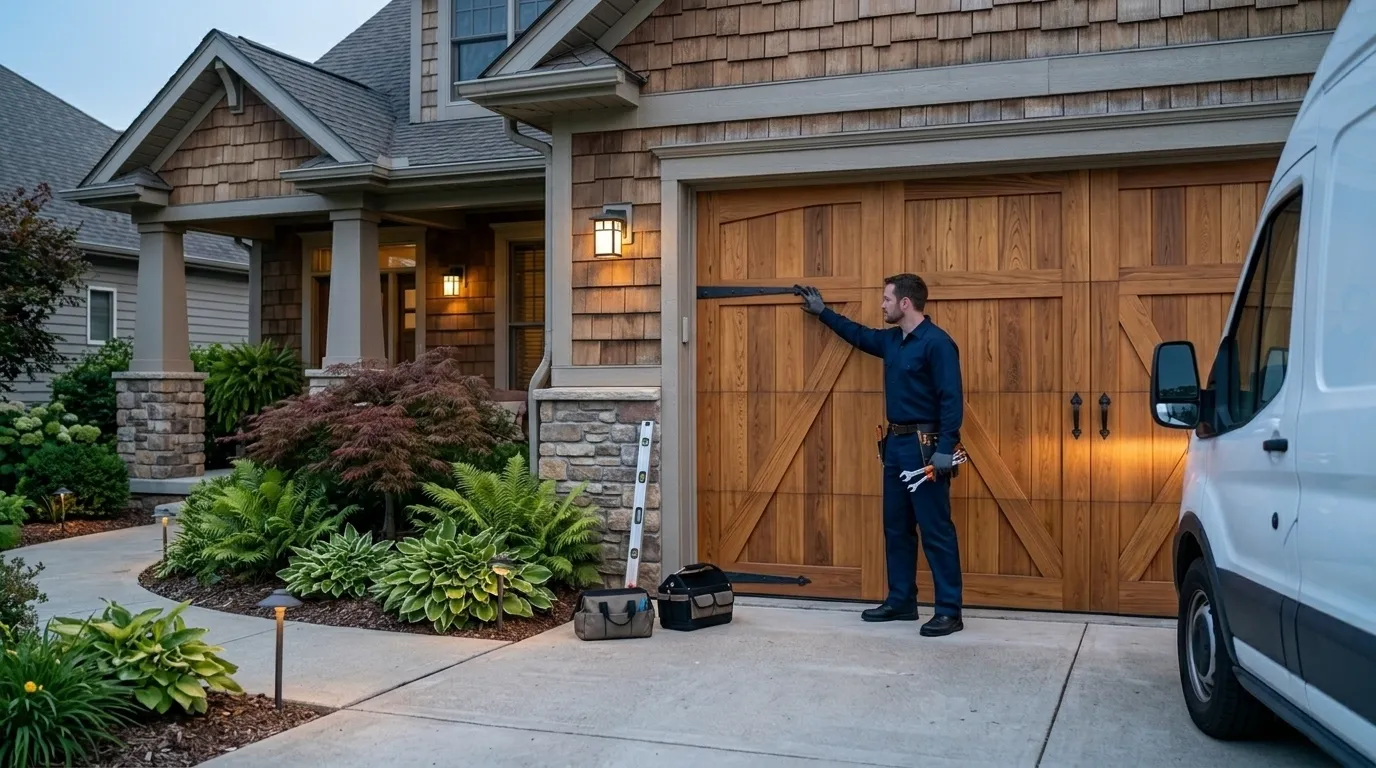
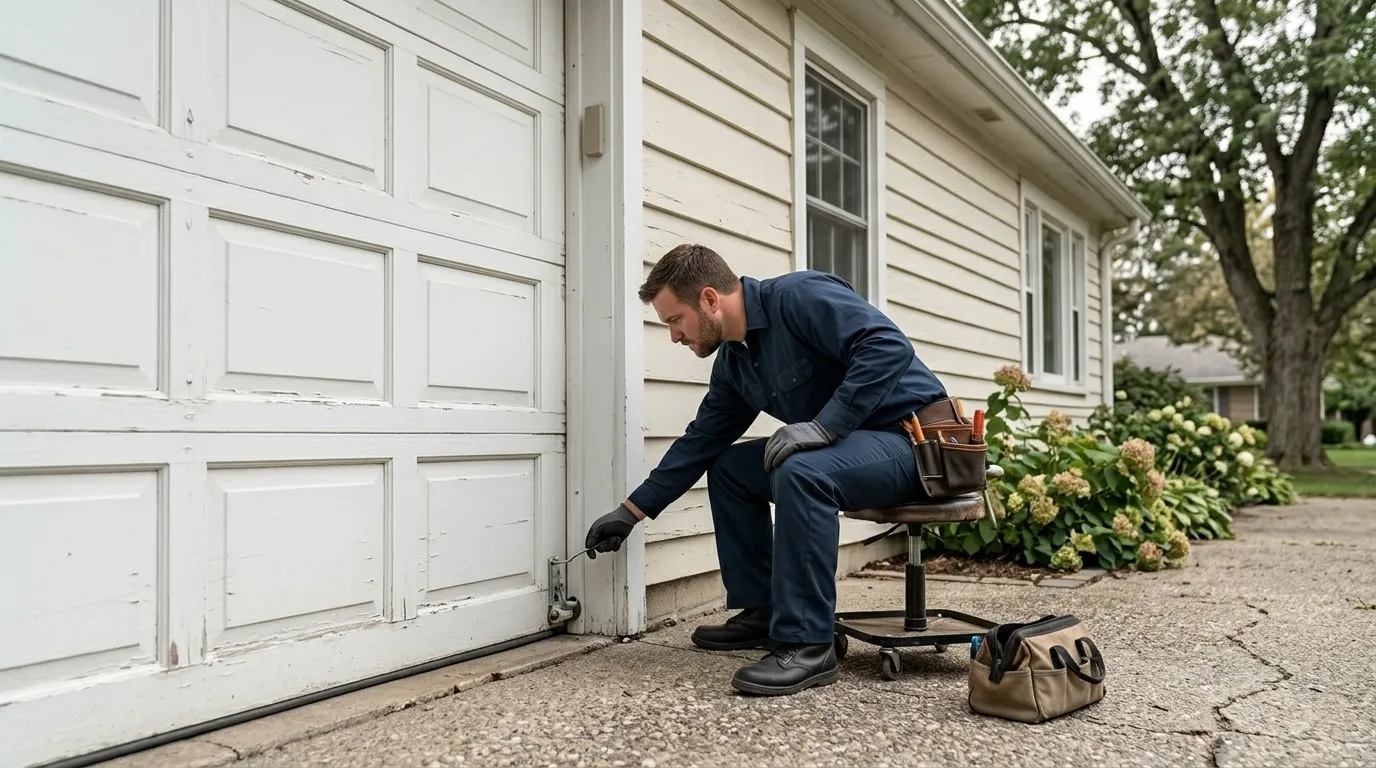
Recent work from this service line.
Why Danville Calls Us
Frequently Asked Questions
Why did my garage door spring break with no warning?
Torsion springs fail by cycle count, not by age you can see. A house built in the 1970s has had decades of daily openings, and the spring gives out abruptly once it hits its rated cycle limit - there's rarely a slow warning sign before the snap.
Does Danville's weather cause garage door problems?
Not much directly. Our mild temperate climate doesn't put doors through freeze-thaw cycling or heavy corrosion, so failures here are driven mainly by age and cycle count on original hardware rather than weather damage.
Is it worth repairing an original opener from a 1960s or 70s house?
Sometimes, but not always. Parts for some older chain-drive units are hard to source, and those units often lack modern safety reversal sensors. We'll look at the specific unit and tell you honestly whether repair makes sense or replacement is the better call.
Can I keep using the door if one spring is broken but the other looks fine?
We don't recommend it, and we replace both. Springs installed at the same time on a door built decades ago have similar cycle counts, so the second one is usually close to failing too, even if it hasn't yet.
Need Garage Door Repair for Danville's Aging Door Hardware?
Call now for straight answers on cost and timing.